

You wake up, reach for your smartphone, and spend twenty minutes scrolling through random updates before your feet even touch the floor. Your daily energy drains away before your day officially starts. Many men face this exact struggle every morning. You want focused strength, clear direction, and real personal achievement, but modern distractions pull you off course.
The ancient Japanese warrior class faced intense pressure, life-or-death stress, and daily hardship. Yet, they maintained calm focus and steady courage. They followed Bushido, which translates directly as the way of the warrior.
Author Nitobe Inazo documented these timeless ideas in his classic 1899 work, Bushido: The Soul of Japan. Learning these samurai principles for living a disciplined life will help you build stronger habits, cut through cheap digital dopamine, and master your daily routine.
Here is how you can apply these eight warrior principles to your modern routine right now.
1. Rectitude (Gi): How to Make Decisions Based on Unshakable Personal Duty

Rectitude, known as Gi in Japanese, forms the foundational bone structure of samurai principles for living a disciplined life. It means choosing the right action simply because it is right, without looking for rewards or applause.
For a modern man, rectitude eliminates daily internal debate. When your alarm rings at six in the morning, you do not bargain with yourself. You stand up because you made a commitment to yourself.
Living with Gi means setting clear rules for your daily conduct. You stop asking how you feel about a difficult task. Instead, you focus on your underlying duty to your goals, your family, and your personal growth. When you base your choices on solid principles rather than fleeting feelings, discipline becomes automatic.
Many men struggle to match these ancient ideas with their current daily obstacles. The comparison chart below breaks down how each virtue solves a specific modern struggle.
| Samurai Principle | Modern Male Struggle | Practical Daily Habit |
| Gi (Rectitude) | Endless internal excuses | Set non-negotiable wake-up times |
| Yuuki (Courage) | Fear of failure and discomfort | Take a two-minute cold shower daily |
| Jin (Benevolence) | Cynicism and selfish focus | Perform one quiet act of help daily |
| Rei (Respect) | Poor posture and messy spaces | Clean your workspace before work |
| Makoto (Honesty) | Breaking promises to yourself | Keep an honest habit log every night |
| Meiyo (Honor) | Seeking cheap online clout | Focus on quality work over social likes |
| Chuugi (Loyalty) | Quitting projects when bored | Finish 30-day blocks on one goal |
| Jisei (Self-Control) | Phone addiction and impulse buying | Put your phone in another room while working |
Applying these direct habits builds real momentum. Step by step, you align your actions with your core values.
2. Courage (Yuuki): How to Act Despite Fear and Modern Comfort

Courage, or Yuuki, is not the total absence of fear. Legendary swordsman Miyamoto Musashi noted in his writings that true warrior courage means executing the correct action while experiencing full awareness of the risk. Modern life rarely requires physical combat, but comfort can easily make a man soft and passive.
You practice Yuuki by intentionally walking toward mild discomfort every single day. Stepping into a freezing shower, picking up heavy weights at the gym, or having an awkward conversation at work trains your nervous system. You teach your mind that discomfort is not a threat.
Do not wait until you feel brave to start a hard task. Take the first step immediately, and let your emotional state catch up with your physical action.
3. Benevolence (Jin): How Strong Men Control Their Power with Compassion

Benevolence, known as Jin, represents love, affection, and deep sympathy for others. Some men confuse discipline with coldness or harshness toward people around them. Historical records show samurai were encouraged to practice poetry, calligraphy, and tea ceremonies alongside weapon training to keep their hearts balanced.
True strength never needs to act cruel or loud. When you build real self-discipline, you gain physical and mental capability. Jin demands that you use that extra capability to support, protect, and lift up others who need help.
You can practice this principle by offering patience to family members during tense moments. Directing your strength outward to serve others keeps your personal discipline grounded in genuine purpose.
4. Respect (Rei): How Self-Respect Drives Daily Routine Consistency

Respect, or Rei, goes far beyond standard surface politeness. In warrior culture, respect begins with how you handle yourself, your personal gear, and your immediate environment. If your living space remains messy, your schedule stays chaotic, and your posture stays slumped, your self-discipline breaks down quickly.
Showing respect to yourself means treating your body and time as valuable assets. You keep your living quarters organized, dress with intent, and show up on time for every meeting. This external order creates internal mental clarity.
Small daily habits determine whether your morning creates chaos or clear direction. The table below illustrates the contrast between a default morning and a deliberate warrior routine.
| Routine Phase | Standard Distracted Habit | Samurai Discipline Approach |
| Waking Up | Hitting snooze three times | Standing up on the first alarm |
| First 30 Minutes | Checking social media in bed | Hydrating and clearing your bed space |
| Physical Prep | Rushing out the door unkempt | Grooming with care and standing tall |
| Morning Focus | Reacting to urgent emails | Writing down your three key tasks |
Adopting this structured morning routine protects your attention span. It ensures that you take charge of your day before the external world makes demands on you.
5. Honesty (Makoto): How Complete Truthfulness Cuts Through Excuses

Honesty, or Makoto, means absolute sincerity in speech and action. In the samurai tradition, a warrior’s word was absolute law; written contracts were deemed unnecessary because lying was viewed as cowardly. In Miyamoto Musashi’s famous text, the Dokkodo, he warned against relying on partial feelings or deceiving oneself.
Most men lie to themselves far more than they lie to other people. You tell yourself that you will start your workout tomorrow, or that one extra hour of video games will not hurt your sleep. These tiny self-deceptions destroy your self-trust over time.
Practicing bushido virtues for men requires absolute honesty about your progress. When you fail to hit a goal, acknowledge it directly without making soft excuses, and adjust your actions immediately.
6. Honor (Meiyo): How to Build an Unassailable Personal Reputation

Honor, or Meiyo, represents a vivid consciousness of personal dignity and moral worth. A samurai guarded his reputation with extreme care because it reflected his character, his family, and his teachers. In modern culture, clout often replaces real character, but honor focuses entirely on what you do when no one is watching.
Building Meiyo means holding yourself to high personal standards even in complete privacy. It means finishing a job thoroughly, paying back debts quickly, and holding your tongue when tempted to gossip.
When you care deeply about your personal honor, you stop taking lazy shortcuts. You complete your work with pride because your output carries your personal mark.
7. Loyalty (Chuugi): How Unwavering Commitment Wins in Work and Relationships

Loyalty, known as Chuugi, requires deep devotion to your duty and your chosen path. Modern culture encourages men to hop constantly from one goal to another the moment novelty wears off. This shiny object syndrome prevents you from mastering any complex skill or building deep relationships.
Applying miyamoto musashi self discipline means selecting a clear path and sticking with it through predictable boring patches. Whether you choose a physical training regimen, a career skill, or a personal relationship, true progress requires prolonged commitment.
Stay loyal to your long-term vision when short-term excitement disappears. Consistency over months and years will always beat short bursts of frantic effort.
8. Self-Control (Jisei): How Mastery Over Impulses Creates True Mastery Over Life
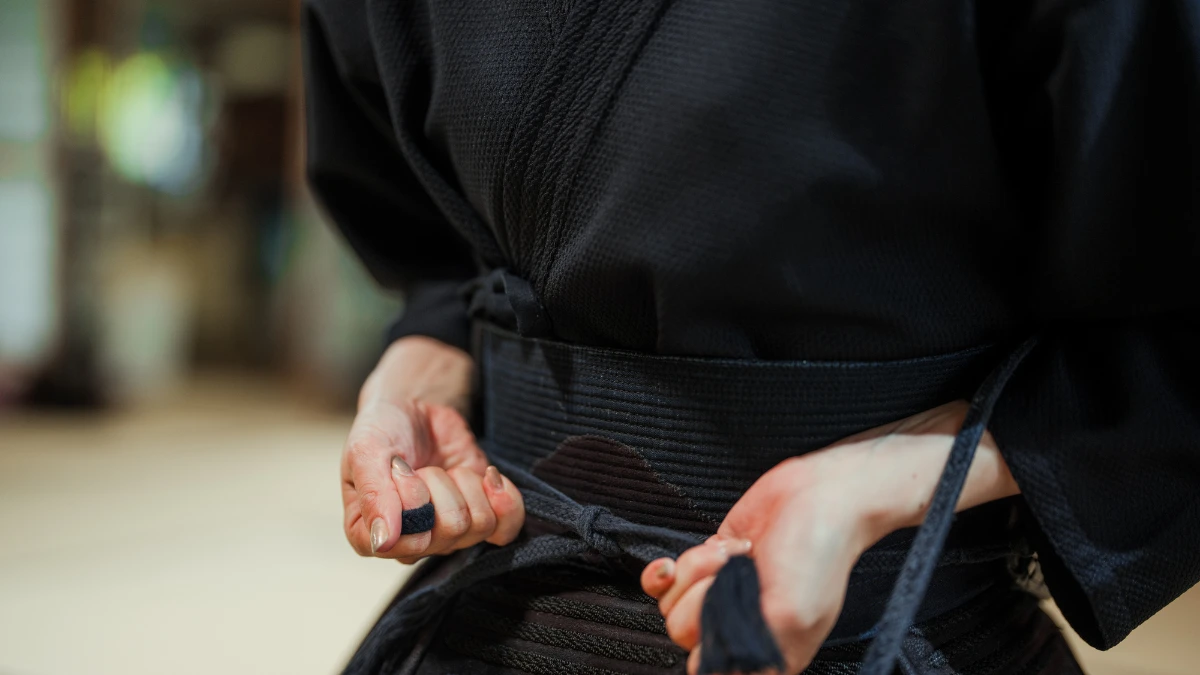
Self-control, or Jisei, is the master virtue that holds all daily discipline habits for men together. Nitobe Inazo highlighted self-control as the essential force that prevents anger, greed, and physical impulses from hijacking a man’s reason.
In today’s environment, corporations hire engineers specifically to capture your attention and exploit your impulses. Without active self-control, you become a reactive pawn driven by notifications, junk food, and sudden emotional spikes.
You build Jisei by creating deliberate friction between an impulse and your action. Pause before reacting, put obstacles in front of bad habits, and master your breath under pressure.
Managing modern triggers requires tactical adjustments to your daily environment. The strategic matrix below outlines practical counter-actions for common impulse triggers.
| Impulse Trigger | Instinctive Reaction | Samurai Jisei Replacement |
| Phone Notification | Pick up phone instantly | Pause, breathe, check phone on scheduled break |
| Task Frustration | Switch to an easy distraction | Set a timer for 10 more minutes of focused effort |
| Evening Fatigue | Binge junk food and video media | Read a chapter of a book and sleep early |
| Social Conflict | React with quick anger | Remain silent for three seconds before speaking |
Controlling these daily micro-moments restores your sovereignty over your own life. You shift from a reactive state to a calm, deliberate mindset.
Building a disciplined life does not happen overnight through radical shifts. Choose one samurai principle to focus on this week, implement its corresponding daily habit, and stay consistent. True self-mastery is built step by step through daily choices.

Author: Brett Calloway
Brett Calloway is the lead writer at MenCraftCo, where he has written the site's outfit guides since mid-2023. He helps men look sharp without overthinking it, with clear outfit formulas, real-life looks for work, weekends and big occasions, and straight advice you can wear the next morning.